South Dakota regulatory rate review
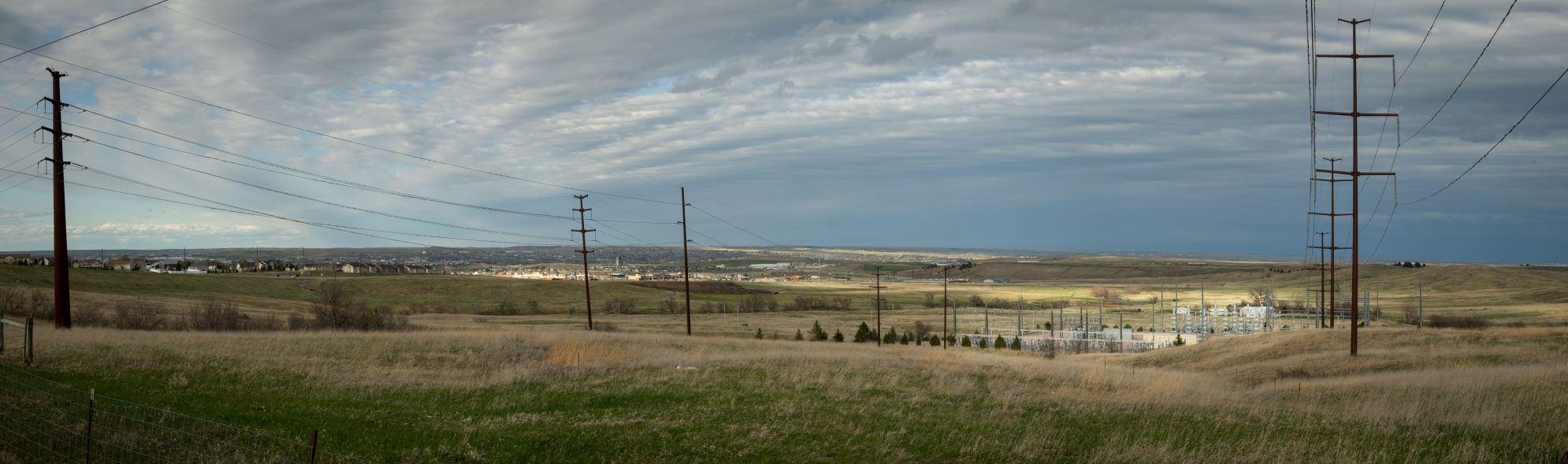
Delivering safe, reliable electric service for South Dakota
At Black Hills Energy, our most important responsibility is providing safe, reliable electric service to our customers and communities. This requires continuous investment in the critical electric system infrastructure that serves 75,000 customers across our South Dakota service territory.
Proposed increase in electric base rates
After holding electric base rates unchanged for more than a decade, we submitted a rate review proposal to the South Dakota Public Utilities Commission (PUC) on Feb. 19, 2026, requesting approval to increase rates which were last set in 2014.
This rate update is needed to recover approximately $523 million in critical investments made over the past 12 years to strengthen the electric grid, maintain reliability, and reduce wildfire risk.
Subject to approval by the South Dakota PUC, the rate proposal would result in an average monthly bill increase for South Dakota residential customers of about $25 per month, or approximately 25%. This equates to a 2% annual increase over the 12 years since Black Hills Energy last changed its rates. Interim rates will go into effect starting in August 2026, with final rates anticipated during the first quarter of 2027.
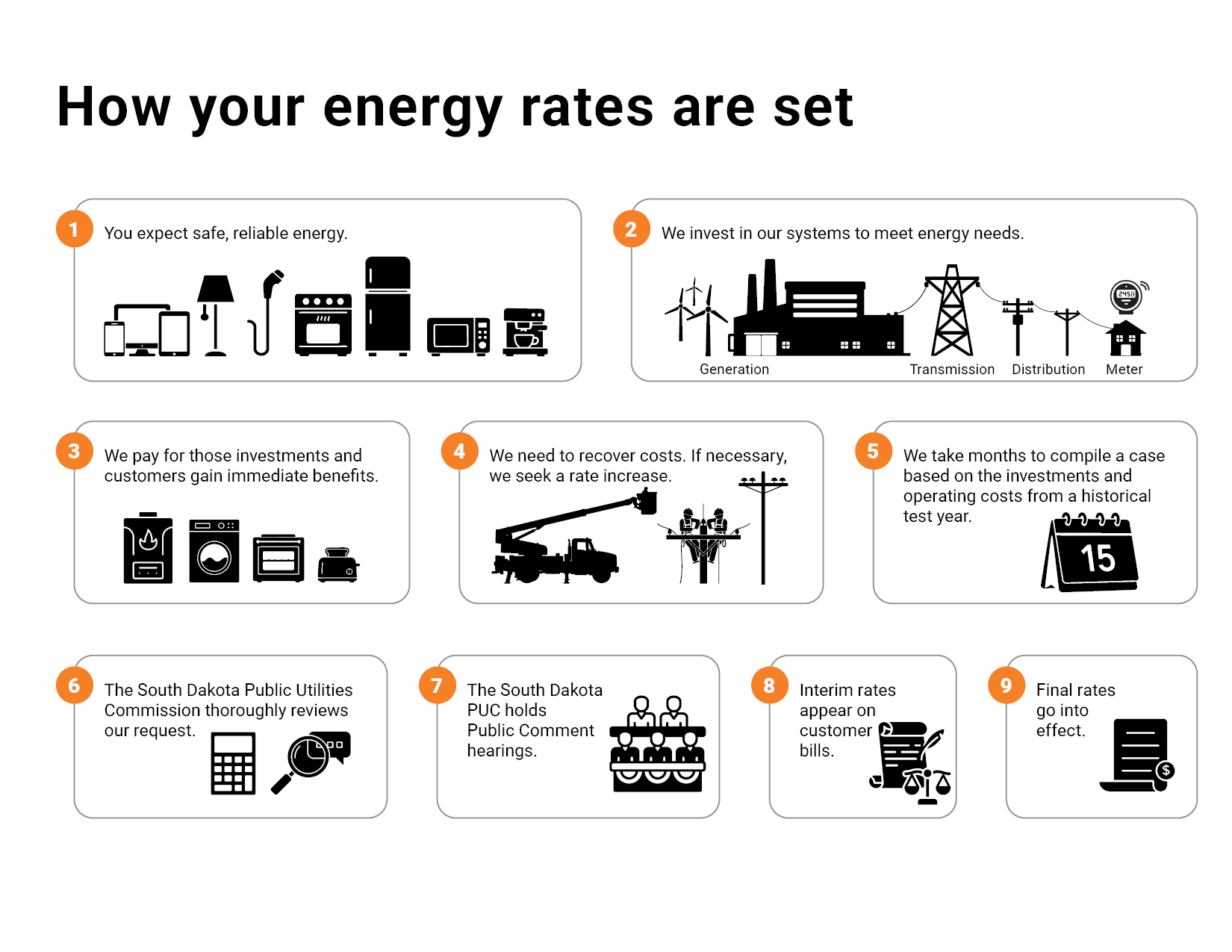
How your electric rates are set
Our electric rates are established through a highly regulated process guided and approved by the South Dakota PUC, allowing utility companies to recover the prudent costs of providing service to customers. The South Dakota PUC will evaluate Black Hills Energy’s rate review proposal while also hearing from intervening parties and considering public comment before it makes its decision about customer rates and the way rates are structured. The final Black Hills Energy service rates approved by the commission may include rates that are higher or lower than the rates proposed by the company or currently in effect.
Proposed changes to customer bills
| Customer rate class | Total average monthly bill under current rates | Total average monthly bill under proposed rates | Change | % change |
|---|---|---|---|---|
| Residential Regular Service (650 kWh per month) | $98.96 | $124.08 | $25.13 | 25.4% |
| Residential Total Electric Service | $131.63 | $167.18 | $35.55 | 27.0% |
| Residential Demand Service | $201.76 | $253.41 | $51.66 | 25.6% |
| Small General Service | $171.86 | $183.51 | $11.65 | 6.8% |
| General Service | $1,600.30 | $2,010.05 | $409.75 | 25.6% |
| General Service Total Electric | $435.58 | $550.28 | $114.70 | 26.3% |
South Dakota PUC Docket No. EL26-003
Support for customers
We recognize the impact of rising energy bills on our customers. That’s why we continually look for ways to control costs and increase efficiency.
Our work to help customers includes:
- Energy Assistance Programs: Black Hills Energy supports energy assistance programs in South Dakota through financial contributions and by connecting income-qualified customers to resources and energy assistance options.
- Bill Payment Assistance: Customers who experience challenges paying their bills are encouraged to contact us at 888-890-5554 or submit an online form on our customer service page as soon as they think they may be experiencing financial difficulties to discuss payment arrangements.
- Energy Efficiency Programs: We are committed to helping customers save energy and money through energy efficiency programs and tips. No matter what approach is right for you, our resources and support can help.
Frequently asked questions
What is a rate review?
In order to change electric rates, we must go through a comprehensive and transparent process called a rate review. The rate review process is guided and approved by the state regulatory commission with input from the public so that customers and other stakeholders have a voice in the proceeding. The rates, rules, and regulations ultimately authorized by the South Dakota PUC may or may not be the same as those proposed and may include rates higher or lower than those proposed or currently in effect.
Why are you requesting a rate update?
At Black Hills Energy, our most important responsibility is providing safe, reliable energy to our customers and communities. We are requesting a rate update to adjust for the rising costs to operate and maintain our South Dakota electric system since rates were last set in 2014. A rate update will allow us to recover critical system costs already incurred to support the safe and reliable delivery of electricity to power customer homes and businesses.
Why now?
Electric rates were last set 12 years ago, in 2014. Since that time, we have made critical system upgrades and improvements to strengthen the electric grid, maintain reliability, and reduce wildfire risk.
How will this proposed rate update impact customer bills?
Subject to approval by the South Dakota PUC, the rate proposal would result in an average monthly bill increase for South Dakota residential customers of about $25 per month, or approximately 25%. This equates to a 2% annual increase over the 12 years since Black Hills Energy last changed its rates. Bill impacts will vary across customer classes based on how much energy each customer uses.
When will new rates take effect?
As allowed by South Dakota state law, we have requested that temporary/interim rates be effective in August 2026, with final rates to be implemented during the first quarter of 2027.
What happens if the final rates are lower than the temporary rates?
If final rates are lower than the temporary rates, customers will receive a refund, with interest, for the difference in rates charged by Black Hills Energy between August 2026 and the time when final rates are implemented.
Are there other changes proposed in this rate update?
Yes. We are proposing to expand the energy efficiency rebate program and increase participation in low-income weatherization programs.
Why have your operating costs increased?
While we have prudently managed expenses since the 2014 rate review, the price of everything has risen over the past 12 years. Inflation has impacted and increased the costs of all aspects of delivering safe, reliable energy to our customers. This includes higher costs of materials such as poles, transformers and wire and cable, as well as increased labor costs and higher fuel costs to operate our service vehicles.
What are some examples of the investments you’ve made to improve electric reliability?
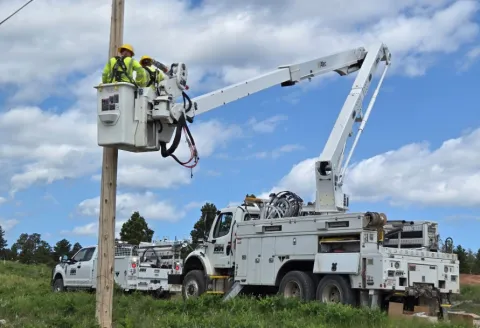
Over the past decade, we have made significant investments in our electric system infrastructure. These investments include upgrades to critical equipment such as poles and structures, transformers and substations, and maintenance costs to ensure safe power plant operations.
How has electric reliability improved as a result of these investments?
We calculate electric reliability by measuring outage information across our system, using an industry standard calculation, the System Average Interruption Duration Index, or SAIDI. From 2016 to 2025, SAIDI improved from 69.9 minutes to 42.1 minutes. This is less than 45 minutes of power interruption over the course of one year.
What about the severe wind event this past December when customers were out of power for several days? Why isn’t this reflected in the reliability calculation?
Major weather events are not included in the SAIDI calculation; however, we are continually working to improve restoration times. As a standard practice for electric utilities, SAIDI is intended to quantify the normal operational performance of the utility distribution system.
How does Black Hills Energy’s reliability compare to other electric utilities?
In 2024, the company calculated a SAIDI value of 56.7 minutes when major events are excluded. This means that the average customer on our South Dakota system experienced 56.7 minutes of power outage in 2024. When compared to other electric utilities, our South Dakota utility was ranked the 10th most reliable utility in the nation in 2024, according to the Edison Electric Institute.
Is the new Lange II Power Plant part of this proceeding?
No. We will seek cost recovery of the Lange II generating facility through a separate proceeding — an annual Phase in Plan Rate (PIPR) — which will be filed later this spring with the South Dakota PUC.
Why is Lange II necessary?
The Lange II Power Plant, now under construction in Rapid City, will serve as a critical system resource to cost-effectively serve customers while enhancing reliability of the company’s South Dakota electric system. The Lange II facility is needed to replace capacity that we will lose due to the retirement of our aged Ben French generation units scheduled for decommissioning in 2027.
Is this rate review being driven by Black Hills Energy’s interest in attracting data centers?
No. This rate review is needed to update rates for upgrades and improvements we’ve already made to support the safe and reliable electric service our customers depend on.
How will this rate review be impacted by Black Hills Energy’s plans to merge with NorthWestern Energy?
There is no connection with this rate review and our company’s intention to merge with NorthWestern Energy. By joining forces, we will have the added scale to make us a financially stronger, more resilient utility better equipped to meet the challenges of a rapidly changing energy landscape.
What is Black Hills Energy doing to control costs?
Our customers count on us to deliver the energy they need while keeping bills as low as possible; that’s why we take steps inside our organization to find efficiency and reduce costs. Some of the steps taken include improvements in customer service, automating and standardizing processes, and using work management and dispatching software for more efficient routing and dispatching of technicians.
What is Black Hills Energy doing to help customers?
We know many people are facing challenging times, and no one wants to see rising electric bills. That’s why we increased our efforts to provide support for customers, including:
- Launching a new Energy Assistance team to help our most vulnerable customers access programs and resources to help make their bills more affordable.
- Offering Budget Billing, a free payment plan that averages the amount owed each month, is a great way to avoid seasonal spikes in bills.
- Connecting customers to payment plans and Black Hills Cares through our customer service number at 888-890-5554.
- Helping customers save energy and money through energy efficiency programs and tips.