What to know before, during and after a storm
If you smell a gas odor, immediately evacuate from the building or area. Once you’re away from the building, call 911. If you see damaged lines, leave the area immediately and call 911. Then, call us at 888-890-5554 to report the problem.
How you can prepare before the storm
We work to make sure you have safe and reliable energy, but occasionally the weather or other circumstances can create issues. We’re always ready to respond if an issue is caused by severe weather. Our highest priority is to provide you with safe, reliable service.
Here are some things you can do to help you stay safe — especially during severe weather.
Keep your energy source safe
- Know where your natural gas meter is located. This is usually located outside your home, near the foundation.
- Know where your service mast is located. A mast is on the outside of your roof or at your meter and looks like a metal tube or pipe. It feeds electricity to your home from the overhead power lines. As the homeowner, you’re responsible for maintaining and repairing your home’s service mast.
- Secure any loose items. Check outside your home or business for any items that could be blown around by the wind and damage your energy source, such as lawn furniture, garbage cans and patio umbrellas.
- Prepare for debris. Trim any trees or shrubs that could fall on your service mast, gas meter or appliances.
Check your emergency kit
When severe weather strikes, it pays to have an emergency kit ready and waiting. That way, a weather emergency is less of an emergency.
Your emergency kit doesn’t have to be super complicated. Use our checklist to get started.
Charge your phone
In an emergency, your cell phone can be a lifesaver. But a phone with a dead battery won’t be much help. If a storm is rolling in, make sure your cell phone is charged.
A portable phone charger is a great tool to add to your emergency kit. Check it periodically to make sure it’s still charged and ready.
Have a plan
Emergencies come in all forms. Whether a forest fire threatens your home, your house has a natural gas leak, or a major storm has caused extensive damage, emergencies leave us feeling unprepared. Knowing what you’re going to do and how you’re going to do it can offer an enormous sense of relief in an emergency.
Use our list to create your emergency preparedness plan.
If any member of your family is on life support, plan for arrangements to get them to a location where their needs can be met if electric service is interrupted. Also call us at 888-890-5554 to make sure we've noted a life-support system exists at your home.
Emergency power source
If you need an emergency power source, like a generator, during or after a storm, be vigilant about safety and learn how to use it properly.
Carbon monoxide safety
Broken equipment, blocked vents or using alternative power sources like charcoal grills to heat your home can create dangerous carbon monoxide fumes. Because carbon monoxide is odorless, colorless and tasteless, install a carbon monoxide detector with fresh batteries in your home. It will warn you of potentially dangerous levels of carbon monoxide.
Stay safe during the storm
Potential outages can be caused by lightning, snowstorms, high winds or equipment failure. If a service interruption occurs, we’ll make every effort to restore your power as quickly as possible.
- Stay up to date on potential outages. We issue ongoing service restoration updates to the media, on our outage map and on our Facebook and Twitter pages. Follow instructions and guidance from emergency management officials.
- Stay indoors and away from windows. Lightning can strike windows and doors, so it is best to stay away from them during a storm.
- Unplug all electrical appliances and electronics. You can also protect them with a high-quality surge protector. This will help to prevent power surges and damage to your appliances.
- Do not open your refrigerator or freezer more than necessary. Undisturbed food will remain frozen in most freezers for 12 to 48 hours.
Stay warm and safe in your home if your service is interrupted
- Preserve the heat inside — avoid opening doors and close blinds and drapes to keep your house from cooling down.
- A temporary loss of power will prevent your furnace from running. Once service is restored, your furnace should automatically restore operation. You’re encouraged to call an HVAC professional if this does not happen.
- Dress in layers — wear multiple layers of clothing along with a hat and gloves.
- In extreme cold, avoid wood fireplaces because they require extra ventilation to prevent carbon monoxide buildup.
- Never use outdoor barbecue grills, kerosene heaters or camping heaters inside your home because they emit carbon monoxide.
- If you are having trouble keeping your home warm during a natural gas service outage, do not stay overnight. Consider spending the night with family or friends or at a hotel if that’s an option.
- To minimize frozen pipes, we recommend leaving a small stream of water running from all indoor faucets (a few drops from both the hot and cold faucets).
- Keep garage doors closed and minimize opening doors to keep cold air out.
Check for damage after the storm
Natural gas meter
- Look for cracks, leaks, standing water, hail damage or any other signs of damage. If you see any damage, call us immediately at 888-890-5554.
- Gently clear debris away from your meter by hand or with a broom. Do not use a shovel, ice pick or other sharp tools as damage could result and make the situation worse.
- Point out the meter and any other above-ground utility structures to anyone you hire for debris or snow removal.
- If damaged, we may not be able to turn on the meter or we may have to red tag appliances and leave them off.
Service mast
Severe weather can damage your home’s service mast. A mast is on the outside of your roof or at your meter and looks like a metal tube or pipe. It feeds electricity to your home from the overhead power lines.
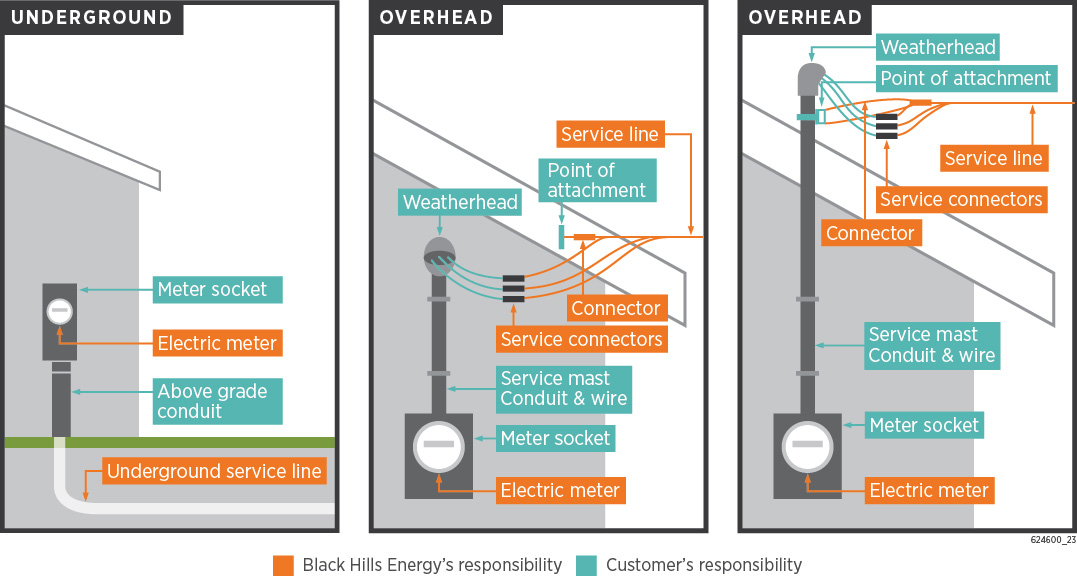
As the homeowner, you’re responsible for maintaining and repairing your home’s service mast.
Follow these steps to repair your service mast:
- Look at the mast on the outside of your home, but don’t touch it because it’s energized.
- Contact a certified electrician to schedule a repair if the mast appears loose, bent or damaged.
- The electrician will call us to come out and turn off service to your home.
- The electrician will repair the meter can or service mast.
- The electrician will call an inspector to inspect the repair.
- The inspector or electrician will call us to restore service to your home.
Appliances
- Heavy rains and large amounts of snowfall can cause flooding any time of the year. Learn how to keep you and your appliances safe during and after a flood.
- Carefully clear debris away from the outdoor vent on high-efficiency furnaces. The furnace won’t run safely and efficiently if the vent is blocked.
- Customers will need to work with their homeowner’s insurance carrier to discuss appliance and equipment repairs that may be required.
- If your electric appliances and equipment have been under water, once dried out have them checked by a qualified repair person before use.
Re-stock your emergency kit
When the storm is over, don’t forget to re-stock your emergency kit with anything you may have used. Use our checklist to replenish your kit.
After the outage
After a thunderstorm, blizzard, other weather event or any outage or shutoff, it’s important that you take steps to keep yourself safe. Assume all downed powerlines are energized and keep your distance. Call 911 and then call us at 888-890-5554 to report a downed powerline. If you smell natural gas, move to a safe distance, call 911 and then call us at 888-890-5554.